Restore Restore Restore Restore
Restore
Improving Non Fiction Reading Retention
ABOUT
In early 2024 I started reading a lot more non-fiction. The goal was to learn more, in exchange for spending less time on my phone.
Two things happened. I spent less time on my phone, but I felt like I didn’t learn that much. I decided to solve this problem by designing and building a tool to help non-fiction readers like me remember more of what they read. The result is an app that has garnered attention, funding, and is rapidly on it's way to the App Store.
MY ROLE
Founding Product Designer
& Developer
TIMELINE
Sept '24 - Now
TOOLS
Figma
Cursor AI
Claude
Xcode
Github
Reading sucks.
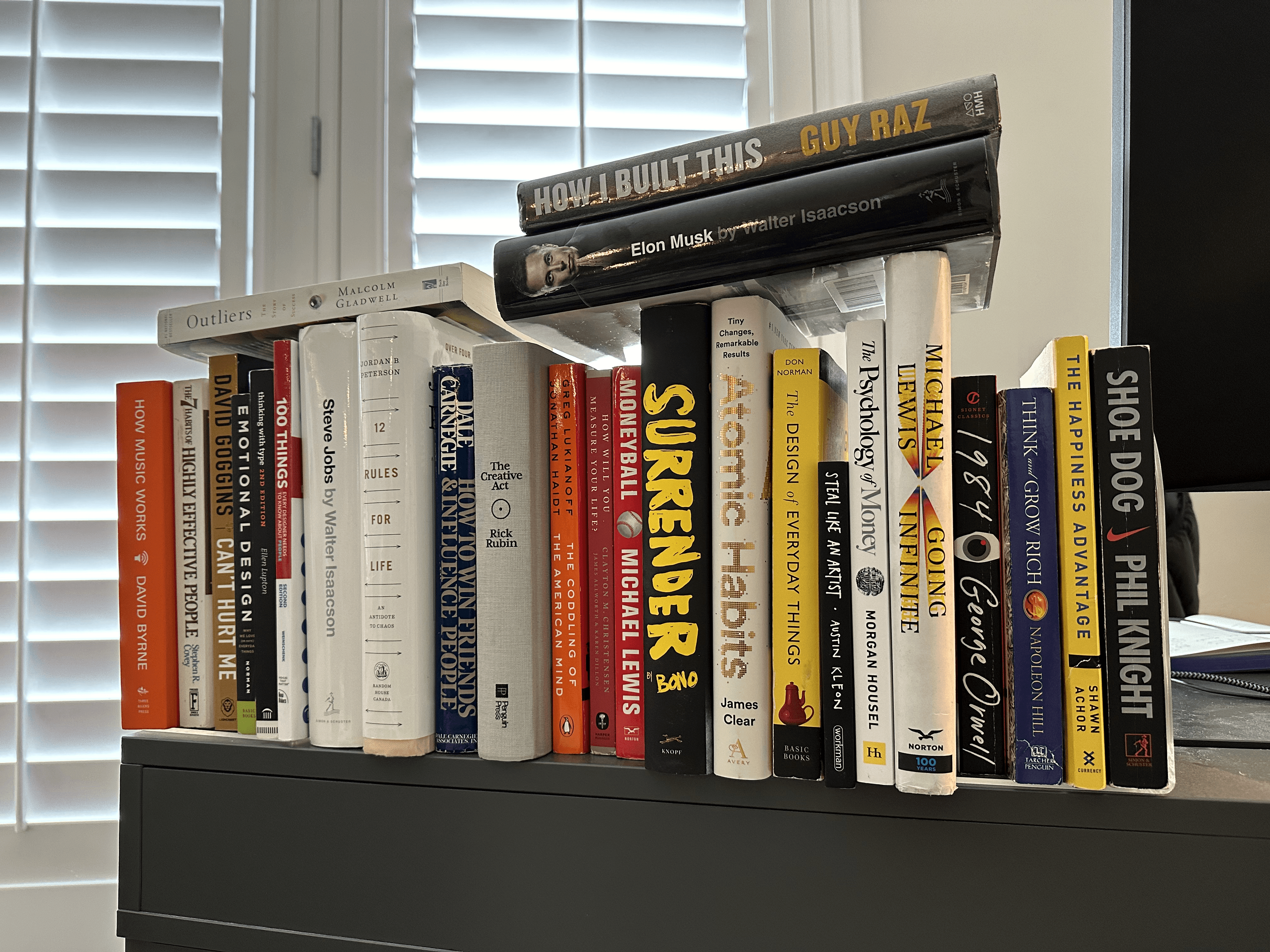
At least that’s what I thought. Until I set a New Year’s Resolution that I actually kept. After being someone who could count on one hand how many books they’d read in the past few years, I decided to change things up and set an ambitious (for me) goal of reading 15 non-fiction books in the year 2024. I had noticed that all the absolute smartest people in my life were constantly reading, and I wanted to join the club.
Actually, reading doesn't suck.
Was what I quickly found out when I became obsessed with highlighting and annotating all the different pages full of wisdom I had in my hands.
Wait, reading… kind of sucks.
This was my sad conclusion after feeling like I had poured all this time into my reading and study, and felt like I couldn’t remember a single thing about the book’s content. There had to be a solution for this out there, right?
This is not just a me problem
Was what I learned after hunting online to find advice on how to better remember what I read. What I found were several YouTube videos all with millions of views recommending different strategies or tools to enhance reading.
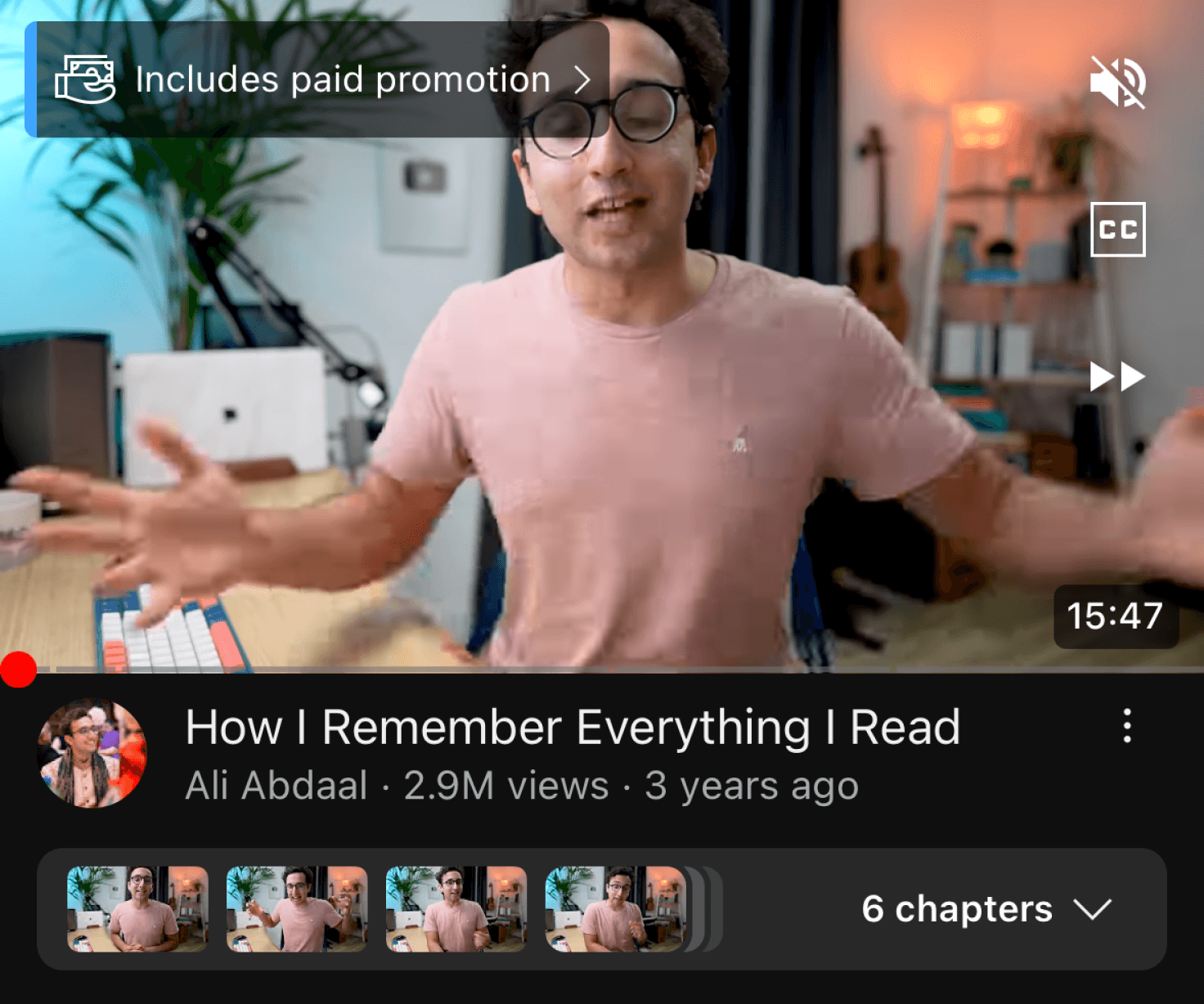
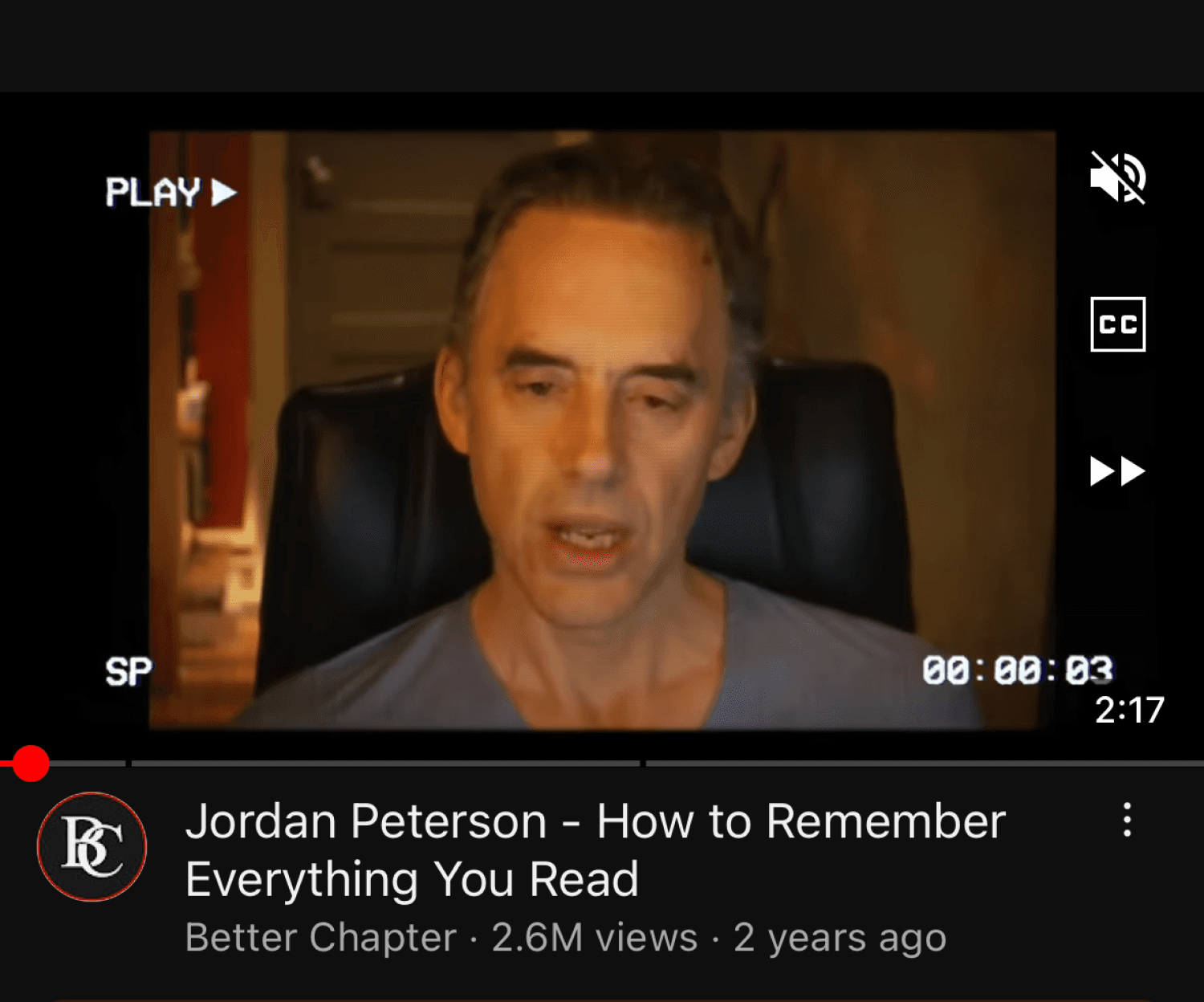
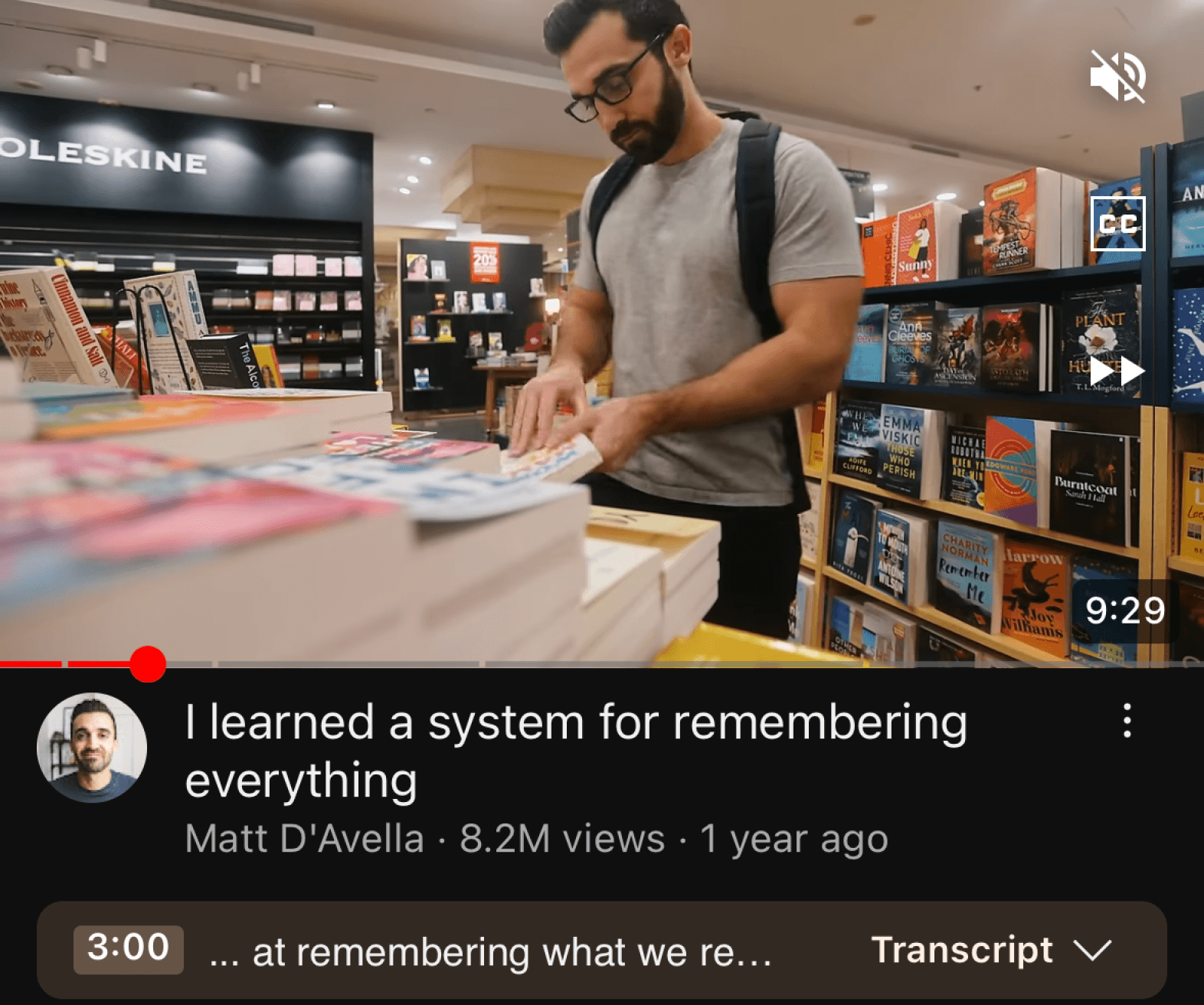
Some of the videos I watched when I tried to learn strategies
to better remember the things I read. Look at those view counts!
Enter Readwise
A common theme between some of these videos was the mentioning of Readwise. Readwise is an app where people can add highlights from their physical and digital libraries. Each day, the app prompts you to complete a “daily review”, and as intriguing as this may sound, it just consists of rereading five of your added highlights verbatim.
Interacting with the app, it just felt underwhelming. It was bad UX, bad UI, and although I felt some of it’s features had potential, it wasn’t really doing anything for me. The app wasn’t really allowing me to deeply engage with my reading and I learned some other Readwise users felt the same way.
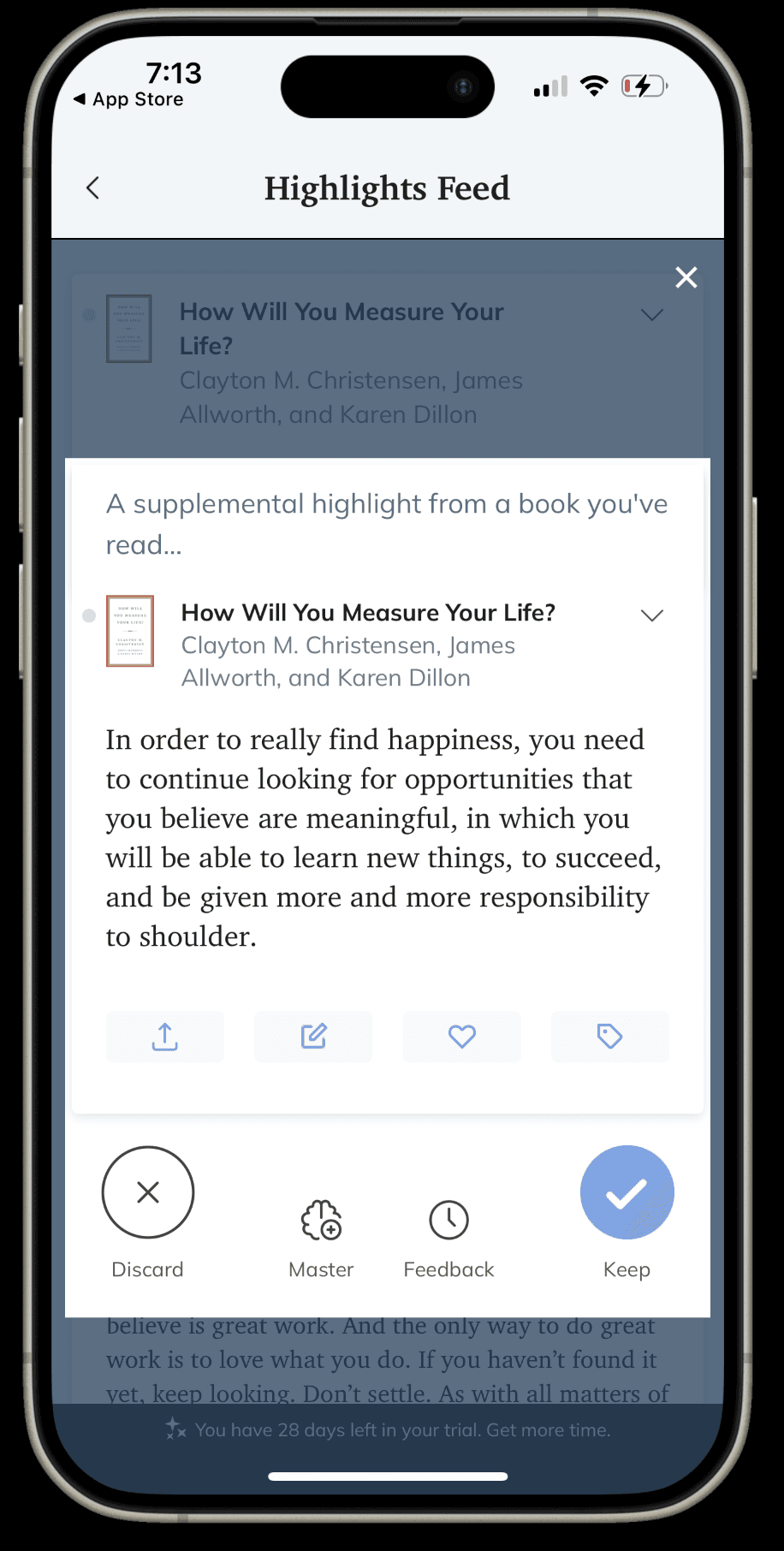

This, is Readwise
“I have been using Readwise for 2/3 months now. At first it was a novelty, but now I question myself what is the value I get out of it… Even if I have thousands of highlights stored from various sources, I somehow feel it is not going to massively boost my wisdom.”
-
Comment from a Reddit user
None of these tools solve this core issue
This was my conclusion after researching retention strategies, interacting with Readwise & other similar apps, and reading user complaints. I decided that there was just not enough of an adequate tool out there.
It was clear to me that we need a smarter way to improve our reading retention. We need a tool that actively engages with our comprehensive reading library & unlocks deeper understanding.
At the time of my research, I was in a class where one of our assignments had us design a flow for a problem we were wanting to solve. I got my brain spinning & did some initial ideation, wire-framing, user testing & even designed a high fidelity concept for a solution to this. This was a fun exercise, but I unfortunately I thought my concept app had to remain just like that--a concept, until Fall of 2024.
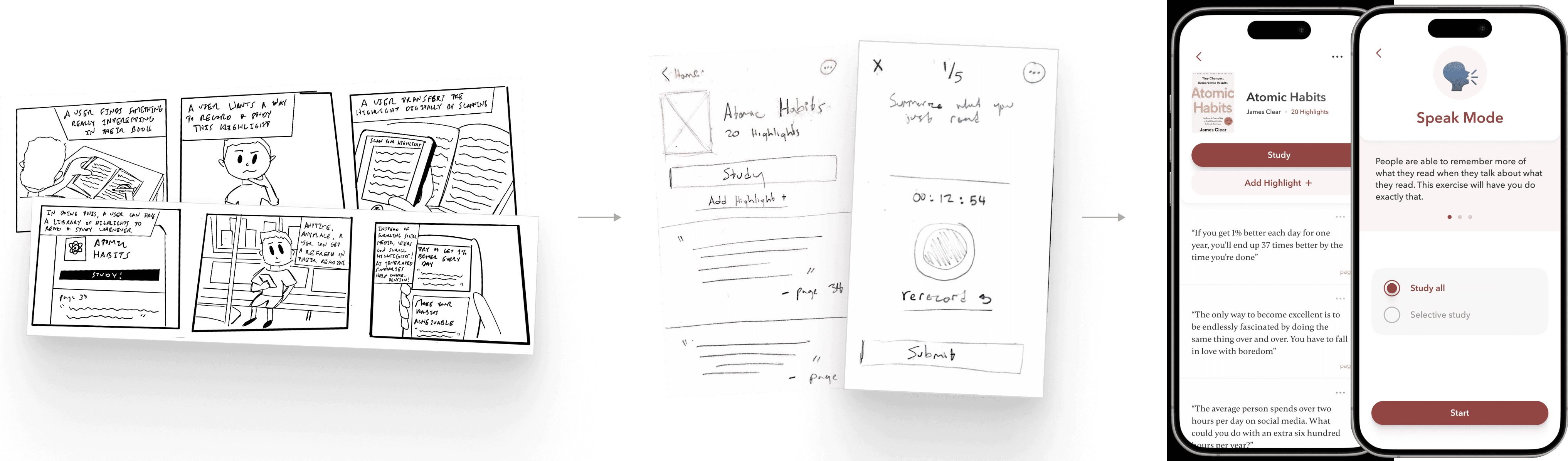
Fall of 2024.
What a time to be alive.
My 2024 Fall semester as a design student at Brigham Young University ended up being monumental. I joined a program called Sandbox, a startup incubator where students are taught how to build and sell businesses in hopes of becoming successful. At the same time I started this program, insane things started to happen in the AI space.
Tools like Cursor & Claude had just picked up a ton of momentum, and it became possible for designers to actually code their designs with the help of AI. As someone who was skeptical of AI, I decided to dabble with it & see exactly what I could accomplish. My mind was absolutely blown, and a new world of possibilities was unlocked. After playing around with and learning these tools better for about a month, I decided I couldn’t let this idea sit on the back burner anymore. It was time to try and make this come to life.

Back to the drawing board
With the ability to turn my app concept into something real, I had to take things more seriously than just a class project. How was my app going to differentiate itself against Readwise, provide real value to readers, and be a sustainable business? I kept returning to my mission, we need a smarter way to improve our reading retention, a tool that actively engages with our libraries & unlocks deeper understanding.
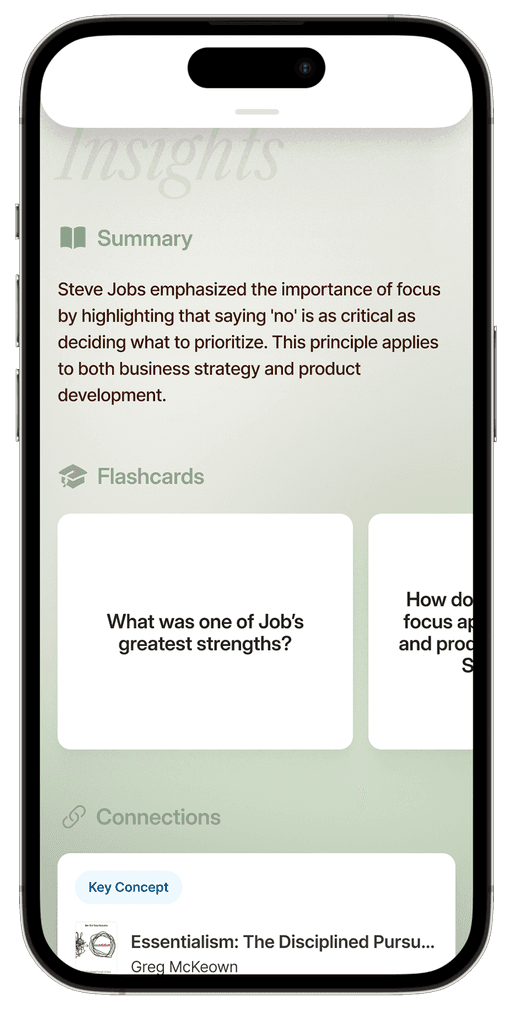
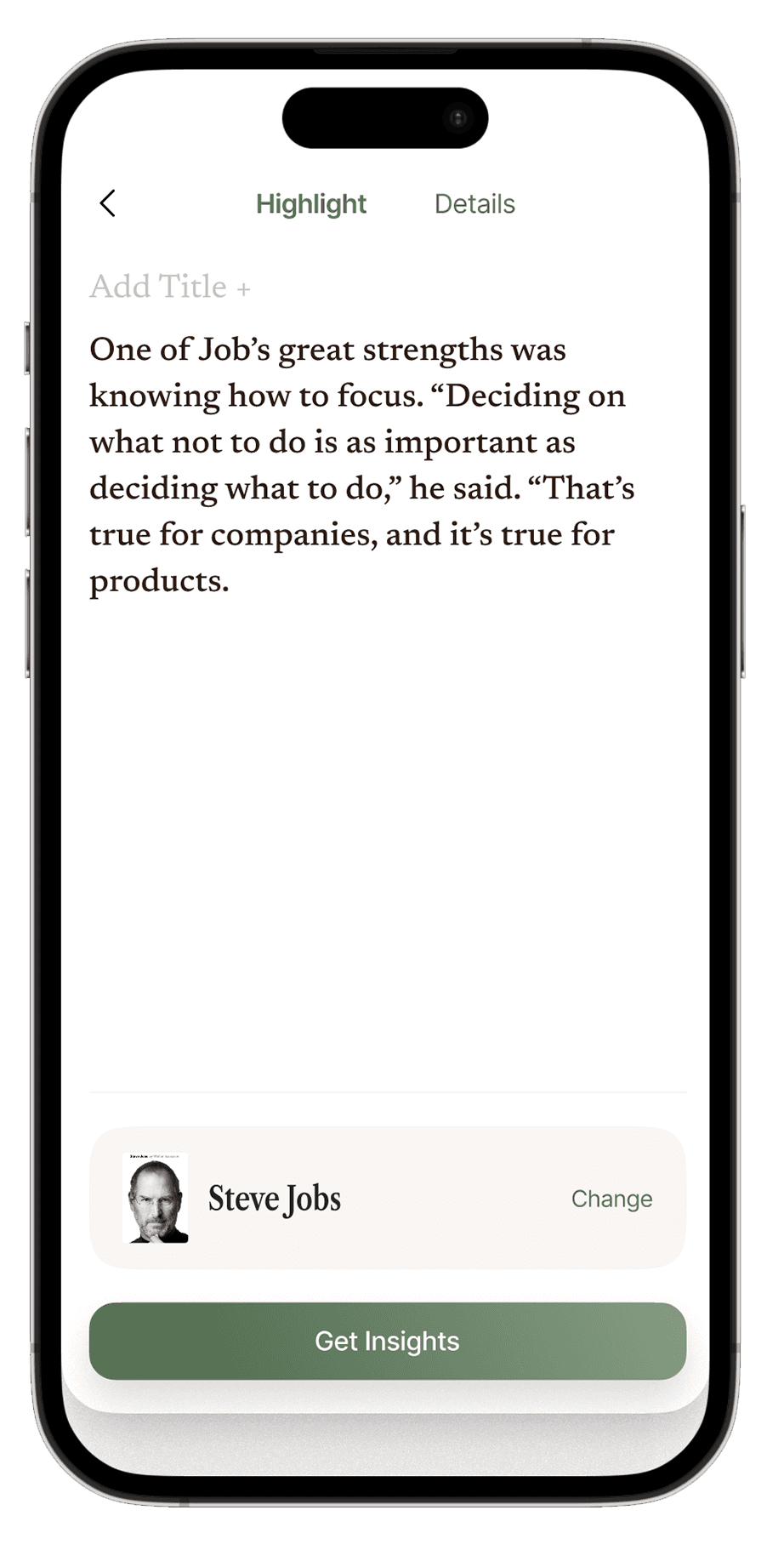
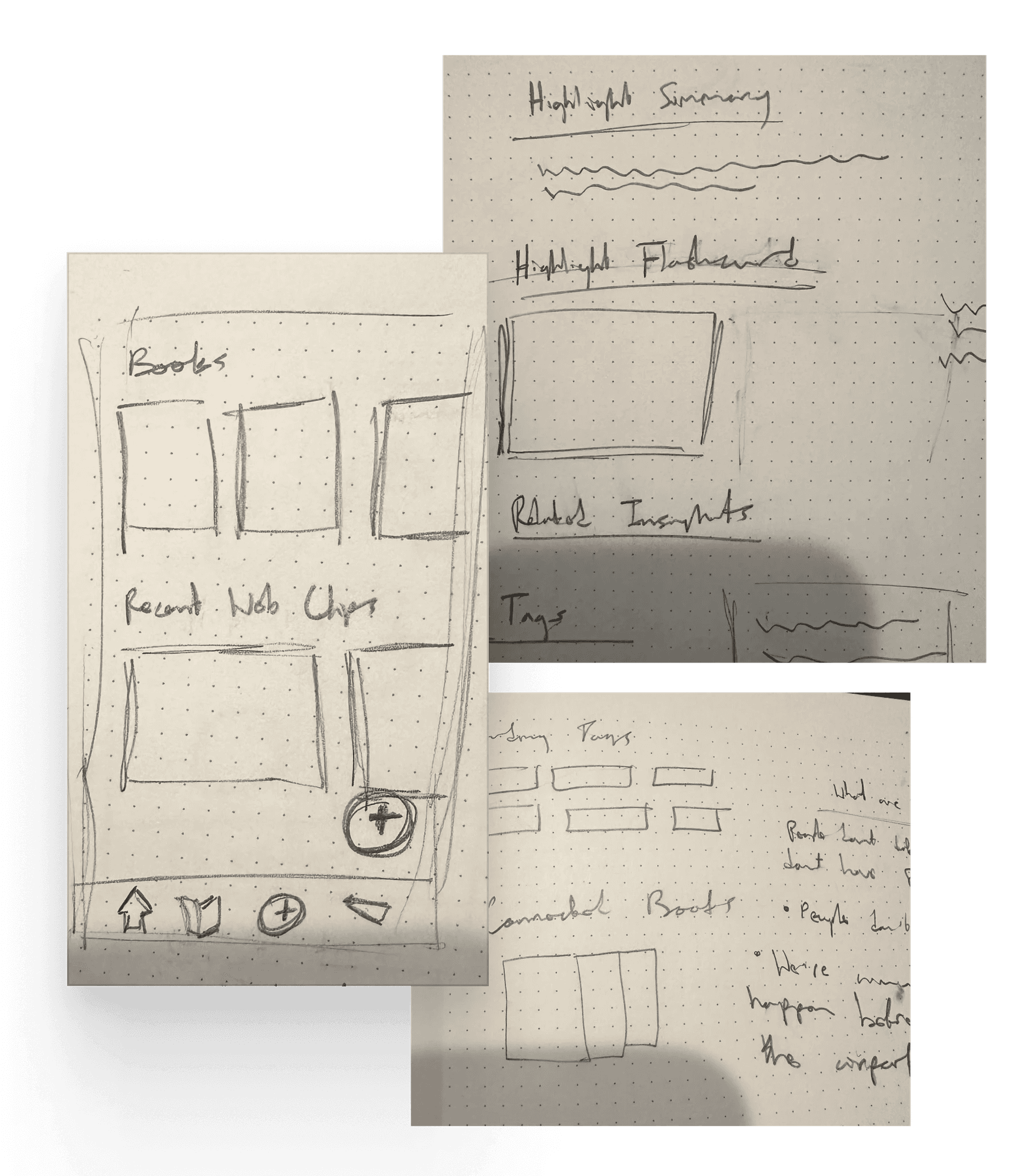
Building off my prior research and concepts, I spent a ton of time fleshing out different ideas, and decided on features that, leveraging AI, could make an app a truly engaging and meaningful tool for readers:
Highlight Summaries
Concise, memorable insights that expand on a highlight.
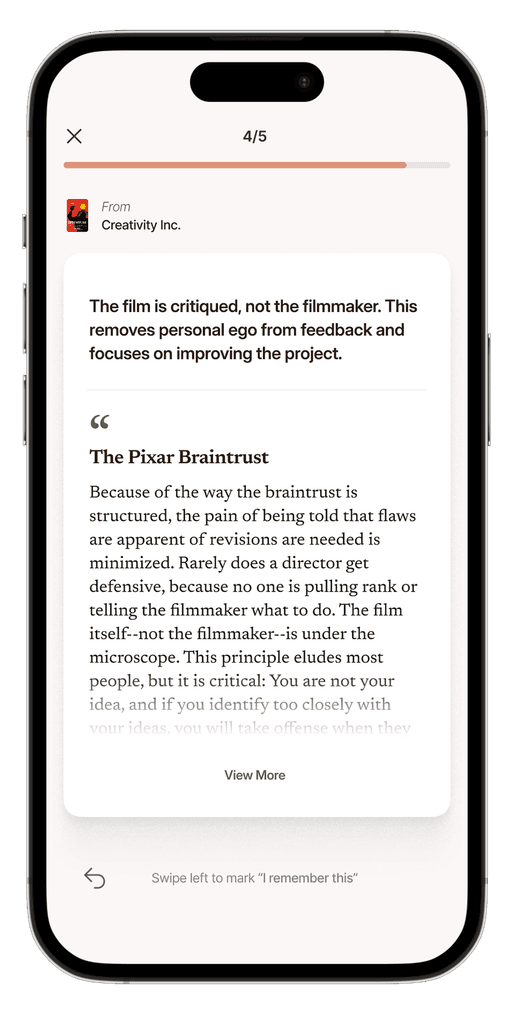
Highlight Flashcards
Dynamic, flashcards that reflect a highlight's content rather than copying it verbatim.
Highlight Connections
Visual links that show relationships between highlights and their shared ideas.
These were features I was confident would make a compelling MVP. I began designing & building and here’s where I’ve landed
so far...
Introducing Restore
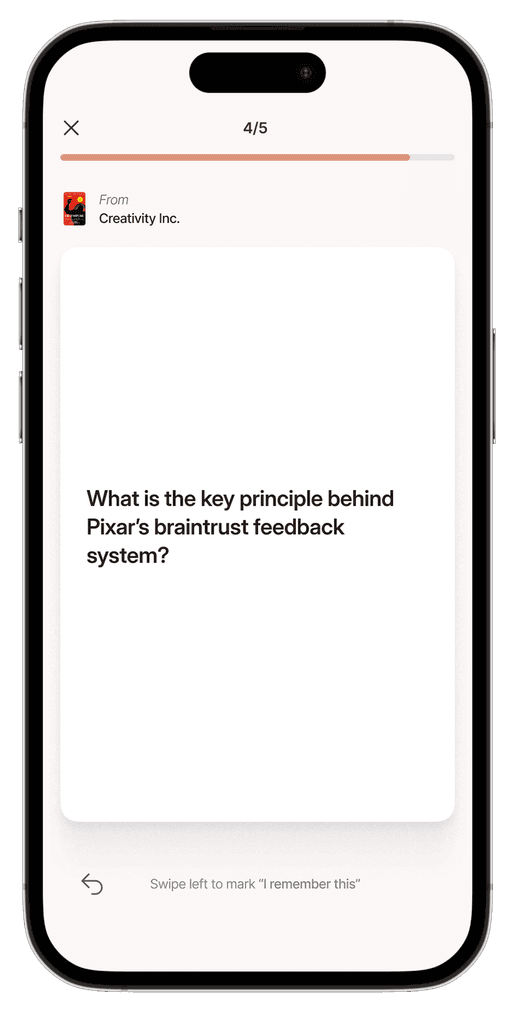
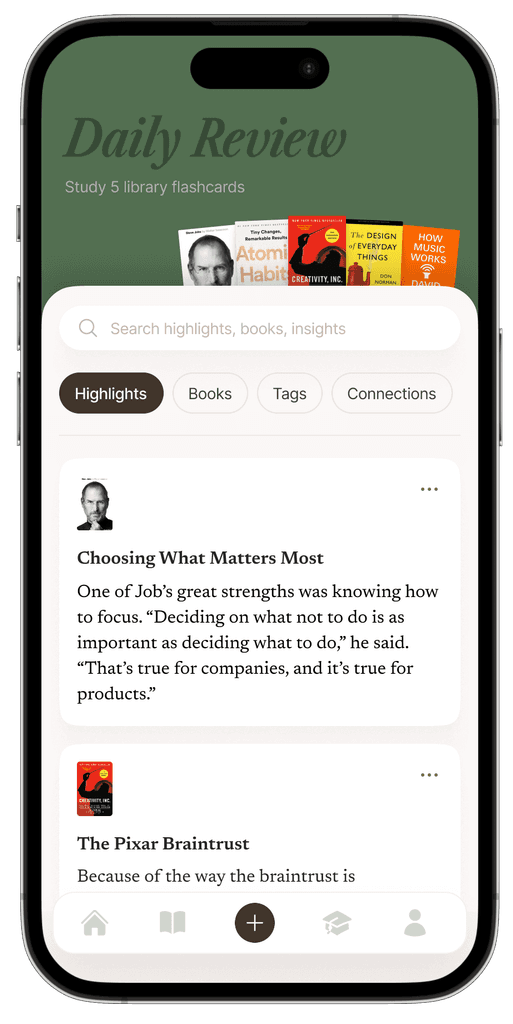
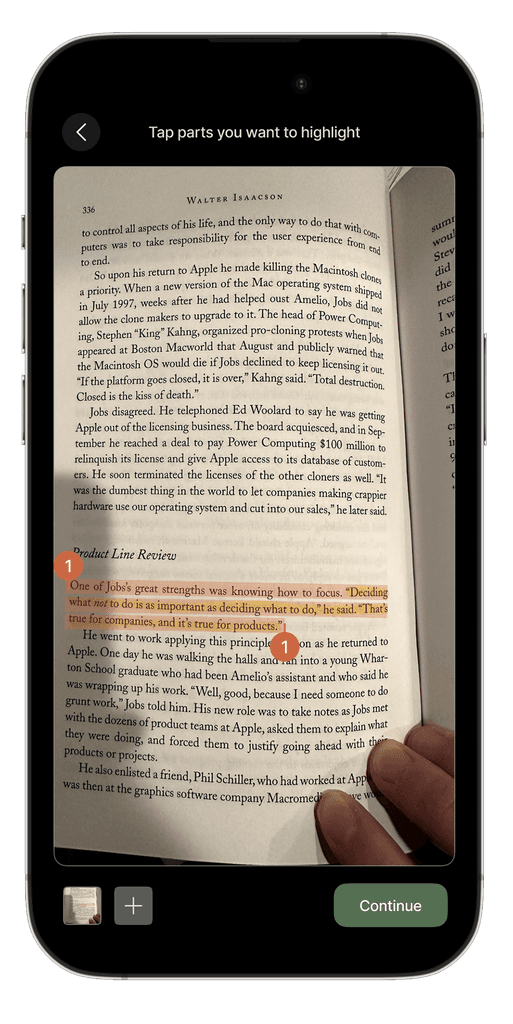
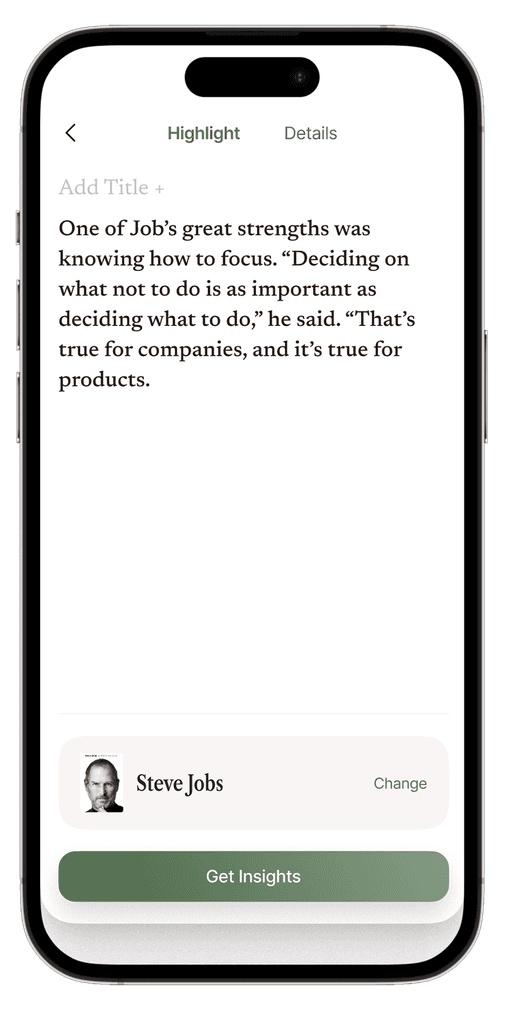
Restore allows users to add highlights from their digital or physical libraries. Leveraging AI, the app transforms each highlight into concise summaries, dynamic flashcards, and intelligent connections to related highlights, unlocking deeper understanding and engagement.
Daily Reviews
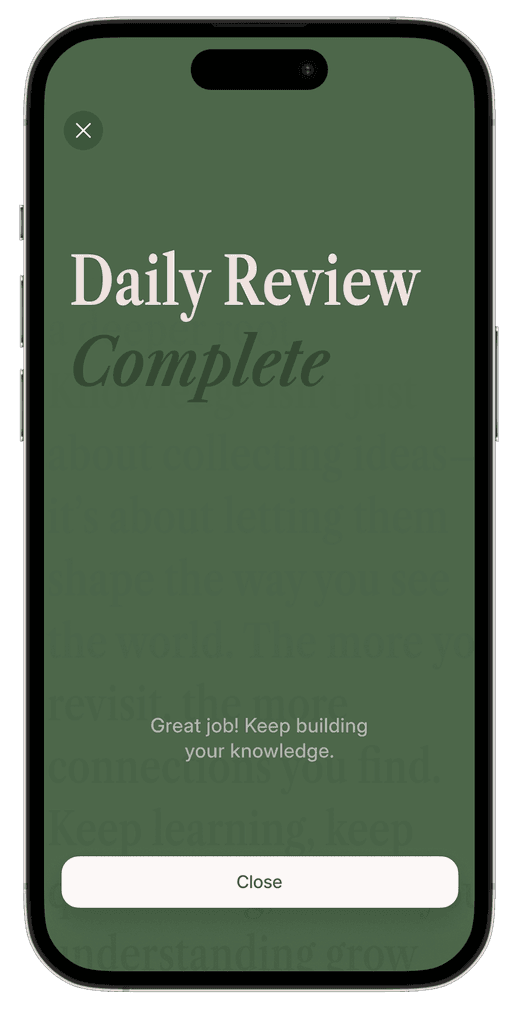
Similar to Readwise, every day Restore users are prompted to complete a daily review… and that’s where there similarity ends. Restore’s daily reviews use interactive flashcards created from your highlights—going beyond simply re-reading the text verbatim. These flashcards incorporate spaced repetition and adapt to your responses, ensuring you retain knowledge in the most effective and personalized way possible.
The Best Part: This isn't Hypothetical.
These designs are being turned into reality. Right now, I’m building Restore and redefining how we learn from the things we read. After testing my prototype & getting positive market validation and metrics from potential users, I was granted some funding from my school cover some of the development costs of this project.
Some data gathered from prototype-viewing users:
77% of respondents rated their interest level in Restore 6 or higher on a 1-10 scale.
34.6% gave a maximum interest rating of 10/10.
42% indicated a moderate-to-high willingness to pay (rating of 4+)